The most dangerous place in the house: the floor!
In 2024, about 30% of adults over the age of 70 fell in their own home. According to the National Council on Aging and the CDC, falls are the leading cause of fatal and non-fatal injuries among older adults. And despite this knowledge, deaths from falls are increasing.
How do we help prevent falls in our parents’ home – or ours for that matter? There are solutions like stability exercises and medication adjustments and managing eyesight issues and installing better lighting. (Read my Wooden Ladder Episode for more on that topic.)
But perhaps the cheapest, easiest, fastest way is to reduce hazards – namely CLUTTER and THROW RUGS!
I’ve discovered that some people have a very strong attachment and affinity for throw rugs.
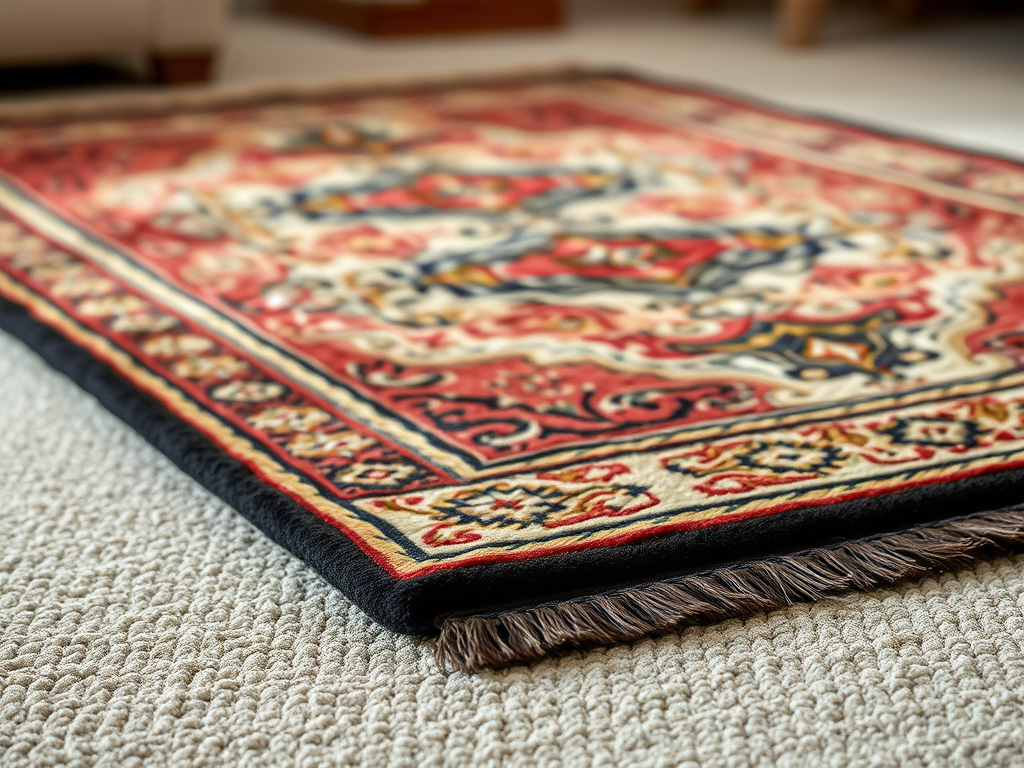
I’ve discovered that some people have a very strong attachment and affinity for throw rugs. For the sake of this discussion, let’s agree that a throw rug can be any soft floor covering that is not attached to the floor. In my parents’ house we have decorative Kilim rugs on top of carpet. Previously-loved rugs are rolled up under beds waiting for future use and others lie in wait in the garage for their chance to come out of storage. Some are lovingly handmade from our Swedish friends who are amazing with a loom; and some are “vintage”; and others are from Marshall’s. Unused pieces of astroturf find their way to becoming “welcome” mats on patio doors. Let’s not waste anything, people!
Just about every room has at least one throw rug in it. Even though 90% of the rooms have carpeting already. In California where the purpose is not really for warmth, throw rugs seem to:
- keep the underlying carpet clean(er) at entries and exits
- provide style, decoration and coziness
- keep feet warm while also risking one’s life on a wet tile floor
There is nothing inherently wrong with throw rugs. All of those are valid reasons to have a few lying around. A few – maybe not 12.
Here’s the rub: when your goal is to age-in-place for as long as possible, wouldn’t you want to do everything you can to make your environment as safe as possible? Especially when one of the people in your home tends to shuffle a bit more than they used to and has had a few minor falls already?
Um, apparently, no. It may still be unbearable to pare down one’s throw rug collection even though you know they may be putting your independence (or body) at risk. I’ve watched my dad almost send the grilled salmon flying across the living room tripping on the entry throw rug to the patio sliding glass doors.
During the pandemic when we (or maybe just I) became much more acutely aware of the health risks to my loved ones, I embarked on a campaign for fall-reduction in my parent’s home. I begged my mother to part with slippery throw rugs, especially the one that slid around the kitchen floor constantly and the one everyone tripped on entering the front door.
She eventually relented and got rid of the kitchen throw rug (or at least hides it while I am there). Unless I have personally delivered something to the donation center I can’t be sure it made it there.
The battle of the throw rugs is epic and ongoing. If we can’t get rid of them, can we please tape them down so they aren’t flying around the house? Eventually, the Amazon truck delivered Gorilla Rug Tape, and we got to work. We taped a few rugs to the floor and other rugs to carpeting.
About 6 months later while I was visiting I noticed all the tape was removed and the rugs were freely floating around. She had roped our unsuspecting housekeeper into the fray and they removed the tape. Fast forward 6 months later and new roles of Gorilla tape arrived to re-do the original taping. I couldn’t face it so soon. I need some sense of respect for my time and effort and redoing this chore won’t help that.
The living room has a large and lovely Kilim rug that creates a sort of frame for the seating area. It is pretty and I like it, too. However, the edges have begun curling up and make it a new major tripping hazard if you encounter a corner. “Should we tape them down?” I ask. “What? No! I have some heavy, clear glass vases we can fill with sand and shells and leave them, barely visible, on the corners to tamp them down.” Ack! This replaces one flat hazard with a raised one that could really do some damage if kicked or tripped on. But alas, this is not the battle to fight at the moment.
The bathmats though. They are a whole ‘nother topic.
These seem especially dangerous because they are extra slippery and usually sit on cold, hard tile floors surrounded by potentially deadly objects like granite counters and glass shower doors.
I know no one wants water on the floor outside the shower. It’s slippery and risks mold and mildew.
Sidenote: (In fact, my mother has rigged up a velcro closure system on the shower curtain such that it is impossible to pry away from the tiled wall and not a drop of water will escape onto the floor. This was installed years ago when we had small grandchildren who irresponsibly let water get all over the floor. This requires some special gymnastics to turn the shower on from the back of the tub so ice cold water doesn’t spray you as you attempt to get in the tub, but no matter! The floor stays dry(er)! )
And yet, we still have not 1, but 2 bath mats layered on the floor outside the tub. At least the base layer has some sticky traction on the bottom. And she did relent and put a bathroom rug in front of the sinks that has some heft and rubber backing which stays in place and puts my mind at ease.
Please don’t get me started on the other bathroom where 2 little towel-type bath mats seem to lie in wait for someone to slip on. I can only manage so much worry!
Does this ring any bells? Please say yes and share your stories of woe and how you solved the throw rug conundrum!
Useful links about falls for older adults: https://www.mayoclinic.org/healthy-lifestyle/healthy-aging/in-depth/fall-prevention/art-20047358
https://www.ncoa.org/article/home-modification-tools-and-tips-to-help-prevent-falls/
Did you know there is funding available to help older adults age-in-place more safely? Visit www.homemods.org to learn more.
 Who Gets The China?
Leave a comment